
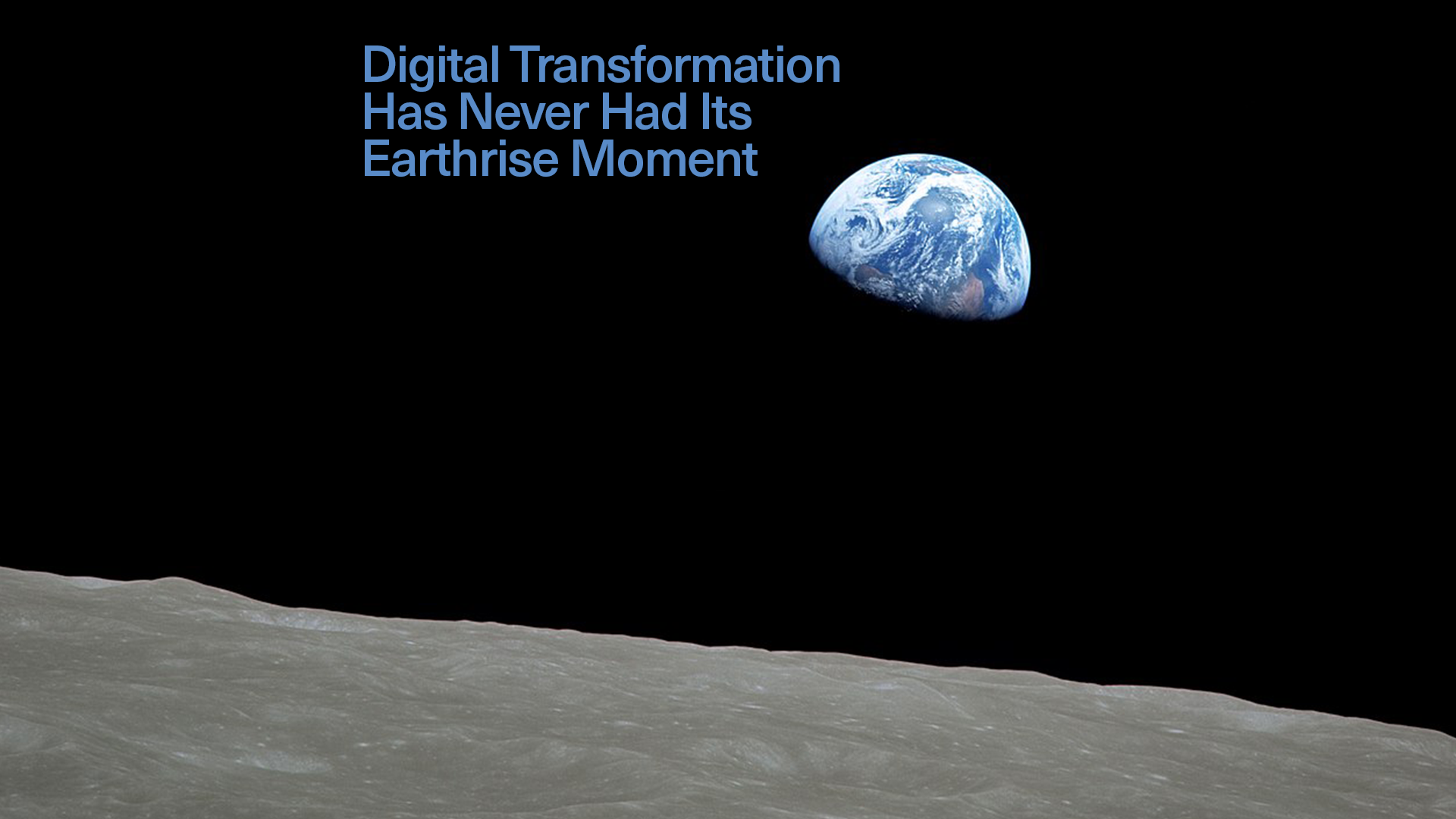
Digital Transformation Has Never Had Its Earthrise Moment What if it already exists – and we’ve been ignoring it all along?
In 1968, humanity didn’t change its behaviour because of a new policy, a better strategy, or a more persuasive argument.
It changed because of a photograph.
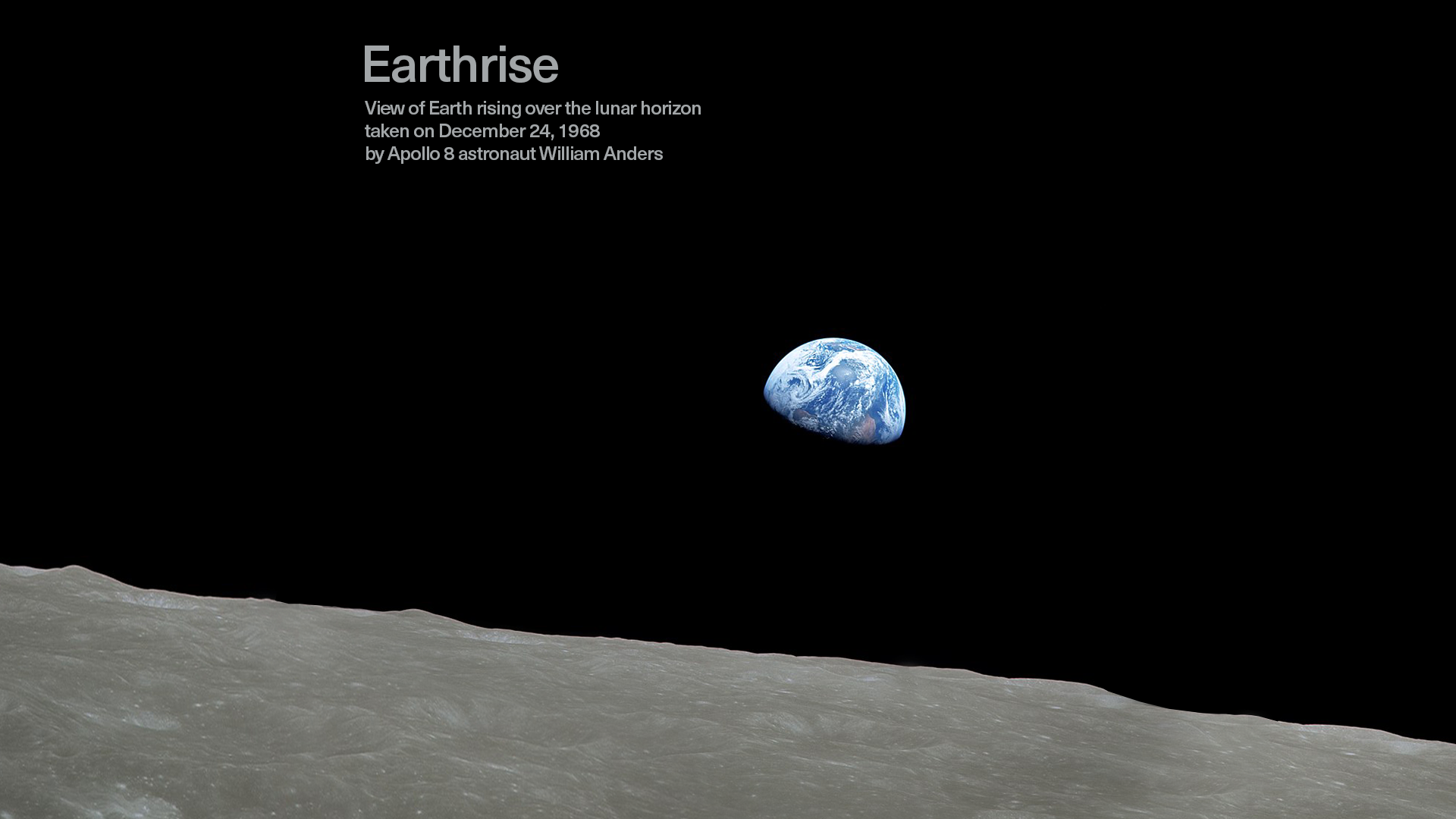
When the Apollo 8 crew captured Earth rising over the Moon, we were confronted with a reality that could no longer be avoided. A single, finite system, suspended in darkness, with no borders, no external rescue, and no one else to absorb the consequences.
We already understood that the Earth was round.
We already understood that resources were finite.
What changed was how those facts were experienced.
For the first time, loss could be seen as continuous rather than hypothetical. The planet was not heading toward failure at some distant point. It was being depleted inside a closed system, day after day, without interruption. The photograph didn’t add knowledge; it removed denial.

–
When Visibility Changes Everything
Digital transformation now sits in the same position.
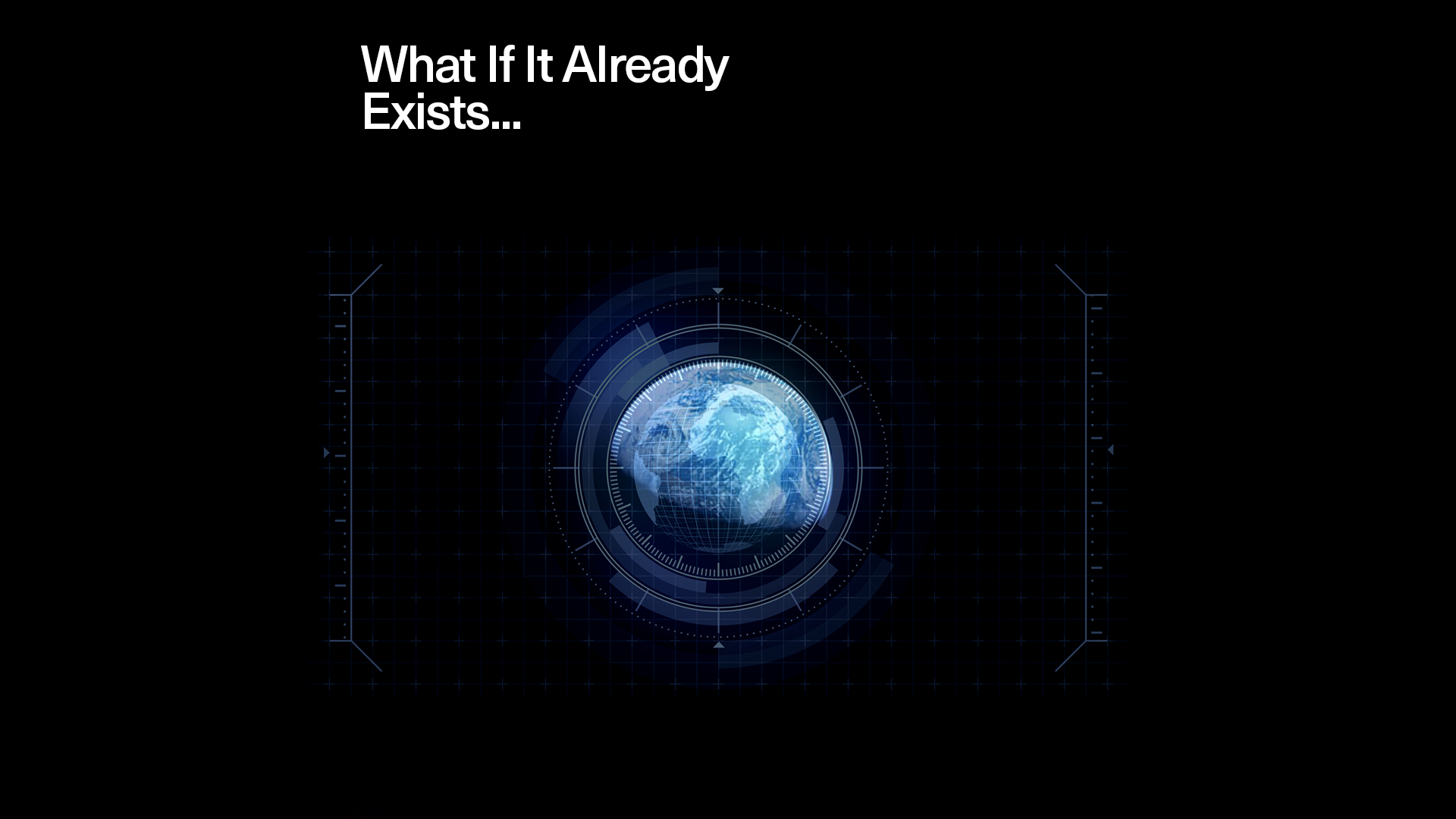
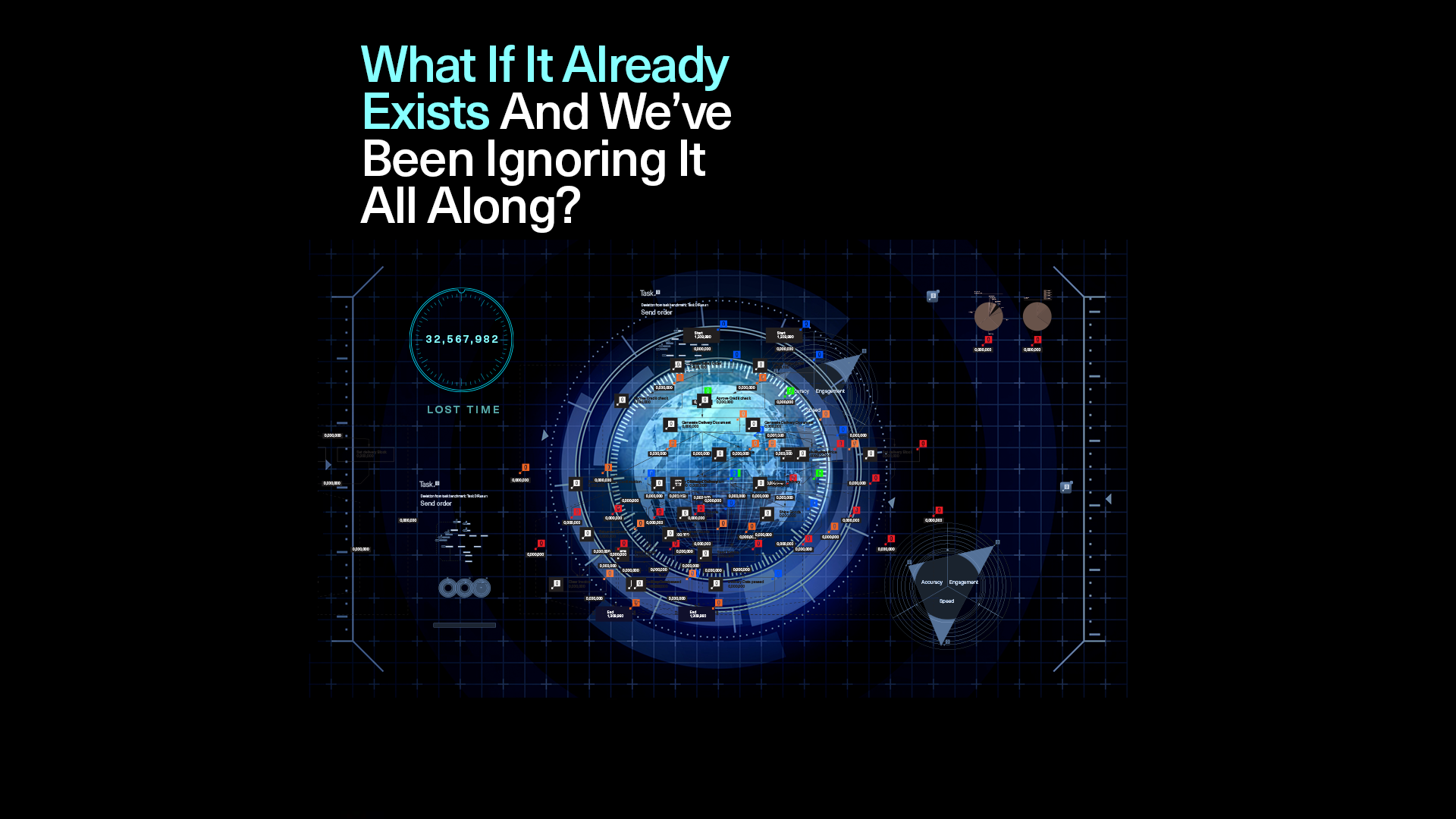
Its equivalent Earthrise moment is time.
–
The Promise of Acceleration – And What Happens Next
IfEvery transformation programme is justified in the language of value. ROI, efficiency and productivity are built into business cases, board updates, and vendor narratives.
The promise is always acceleration.
Then systems go live.
–
The ‘Quiet Drain’ No One Measures
HFrom that point onward, time begins to drain away across the organisation. Tasks take longer than expected. Users hesitate. Workarounds appear. Processes fragment. Adoption stalls and never regains momentum. None of this announces itself as failure. It simply becomes the new normal.
Time lost in this way does not return. There is no recovery phase where it is magically reclaimed. Loss compounds in the present tense.
–
Where Transformation Stories Start to Unravel
This is where most transformation stories unravel. Value is imagined upfront and trusted to persist. Benefits are assumed rather than governed where work actually happens. Adoption is treated as a temporary effort instead of an operational condition that must be sustained. Accountability disperses across programmes, functions, and committees until it ceases to exist in any meaningful form.
When outcomes fall short, explanations circulate without consequence. Delivery is questioned. Engagement is questioned. Users are questioned. Vendors are questioned. Each explanation preserves the structure that allowed the loss to occur in the first place.
–
Responsibility Moved Inward – Then Stopped
TThe Earthrise photograph forced responsibility inward. Governments, planners, and industries could no longer treat environmental damage as external or abstract. They were inside the system they were degrading.
Digital transformation rarely makes that same move.
Time loss is routinely explained away as cultural friction, behavioural resistance, or inevitable complexity. Training programmes are expanded to compensate for broken processes. Large investments in Learning & Development absorb the symptoms while leaving the system that causes the loss untouched.
–
Time Is Not A Soft Problem
TBut time does not behave like culture. It behaves like infrastructure.
Every unnecessary step, every duplicated task, every workaround, every delay is occurring now, inside the organisation’s digital environment. An organisation’s effectiveness is defined by what is happening in the present moment, not by what was designed or approved. What matters is how long work actually takes.
–
Why Time Survives Every Excuse
This is why time is the only reliable measure of value.
When transformation delivers, time compresses and compounds. When it fails, time stretches, fragments, and disappears into operational noise. There is no stable middle ground.
–
The Question Most Organizations Can’t Answer
Once time is treated seriously, a more difficult question emerges: who is accountable for the time the organisation is losing today?
Not in theory.
Not during the programme.
Now.
Most organisations have no answer. Go-live is treated as closure, even though it is the point where exposure increases. Ownership dissolves, incentives shift elsewhere, measurement weakens, and value is left without a guardian.
–
Visibility Without Ownership Changes Nothing
Additional governance does not resolve this. Visibility without ownership creates performance theatre. Reporting without consequence preserves distance. What is required is continuity: clear, named accountability for value after deployment, positioned where decisions about work and prioritisation are actually made.
This is not a tooling gap. The data already exists. The systems are capable. The constraint sits higher.
Leadership has been defined around sponsorship rather than consequence. Funding and endorsement have been allowed to substitute for ownership. That distinction collapses once time becomes visible.
–
The Line We Are Approaching
After Earthrise, humanity could no longer claim ignorance. After an Earthrise moment in digital transformation, organisations will no longer be able to claim success based on delivery alone. If work takes longer than before, the technology is not working. If time is leaking, value is not being realised.
This is the line we are approaching.
Organisations that continue to treat transformation as a finite initiative will repeat the same cycle of promise, deployment, and disappointment. Organisations that recognise time as the definitive test of value, and assign explicit responsibility for it, will separate themselves quickly.
Not through effort. Through honesty.
–
There Is No Neutral Outcome
Digital transformation does not need another framework. It needs its Earthrise moment.
When time becomes visible, responsibility follows. Whether we are ready for it or not.