
UNCONTROLLED by DESIGN
We Rebuilt Work. We Forgot To Govern It.
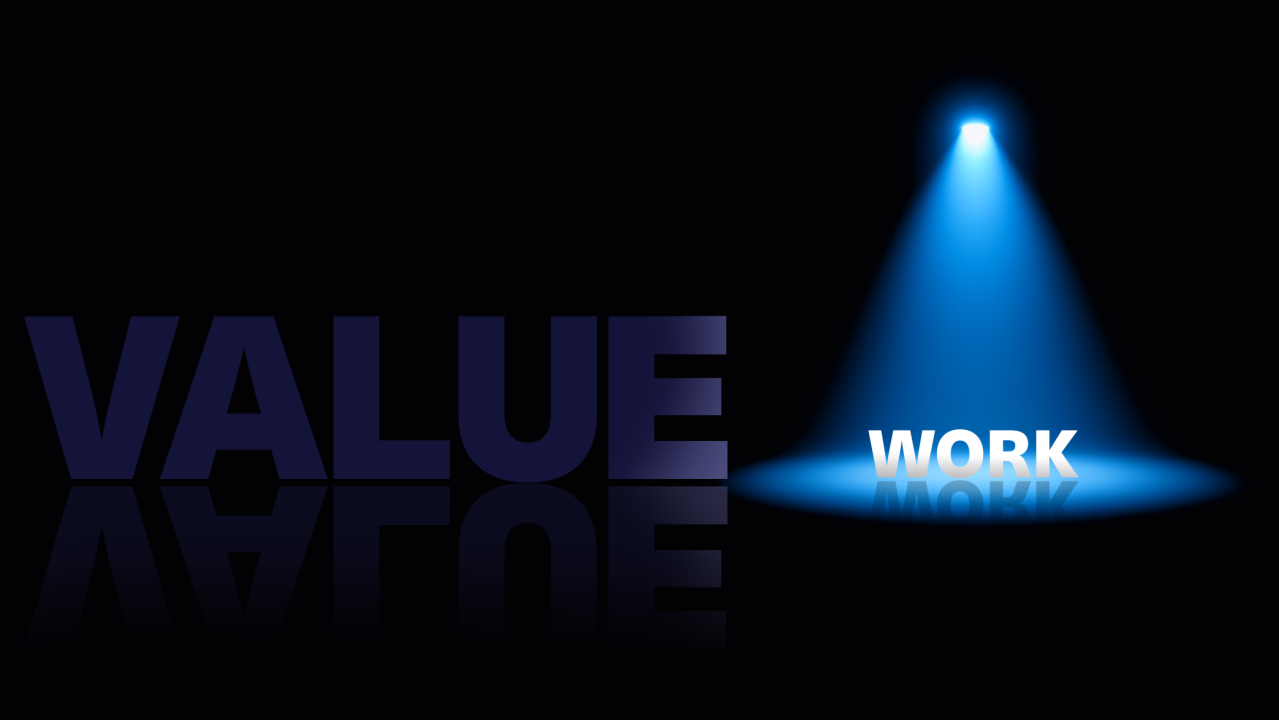
The Architecture of Work Is Evolving Faster Than Its Value Is Controlled
The conversation around the future of work has shifted noticeably over the past 12-18 months.
What was once framed as digital transformation is now being described more precisely as a re-architecture of work itself. Roles are becoming fluid. Tasks are being decomposed and redistributed. AI is reshaping how decisions are made and how work is executed. The enterprise is no longer a fixed operating model. It is becoming a dynamic system.
This shift is real, it’s also incomplete.
Because while the architecture of work is evolving rapidly, the mechanisms used to govern its value have not kept pace, and that gap is where the real risk sits.
More Technology. More Data. Less Clarity
Organisations today have more visibility into work than ever before.
They can track workflows, monitor activity, analyse behaviour, and measure performance across multiple systems. The modern enterprise is instrumented in a way that would have been unthinkable a decade ago. Yet despite this, a familiar question continues to surface: “Where is the value?”
Not in abstract terms, but in practical, economic terms.
- Has productivity actually improved?
- Has cost been reduced in a measurable way?
- Has risk been lowered or simply redistributed?
- Are the expected returns from transformation being realised?
The answers are often unclear.
This is not because organisations lack data, but because they lack a coherent way to interpret that data in relation to value.
As work decomposes across humans and machines, time becomes the only consistent unit of measurement. Without governing time efficiency, organisations lose the ability to quantify value entirely
This is the paradox of the modern enterprise. The more visibility we create, the harder it becomes to establish control.
The Expansion of Work Systems
The emerging architecture of work is characterised by three shifts.
First, work is becoming more fragmented. Tasks are no longer bound to roles in the same way. They are distributed across systems, teams, and increasingly, machines.
Second, work is becoming more composable. Organisations are assembling workflows from multiple platforms, tools, and services, often with overlapping capabilities and unclear boundaries.
Third, work is becoming more dynamic. Processes are changing continuously, driven by new technologies, new data, and new ways of operating.
Each of these shifts introduces opportunity, they also introduce complexity, and complexity, if not governed, leads to drift.
Where Transformation Quietly Breaks Down
Most transformation programmes still operate on a familiar structure.
Value is defined upfront through a business case. Delivery is governed through programme structures. Adoption is treated as a supporting activity, often addressed through change management and training.
Individually, each of these elements is necessary. Collectively, they are insufficient. That’s because they are not connected by a continuous mechanism that links what is being delivered to the value it is expected to generate. As work becomes more fragmented and dynamic, this disconnect becomes more pronounced.
- Business cases become outdated quickly.
- Governance focuses on milestones rather than outcomes.
- Adoption is measured in activity rather than impact.
By the time issues surface in the business, the underlying causes are already embedded in how the system operates. This is not a failure of execution, it is a failure of structure.
The Missing Layer Is Not Technology
There is a natural tendency to respond to these challenges with more technology. More analytics, more dashboards, more AI-driven insights.
But this does not solve the underlying problem, because the issue is not the absence of data. It is the absence of a system that can translate that data into economic understanding and decision-making.
Technology can show what is happening. It cannot, on its own, determine whether what is happening is valuable. That requires a different capability.
From Observability to Economic Control
What is missing is not another layer of technology, but a layer of ownership – responsible for defining, measuring, and governing value continuously. In most organisations this is a layer that sits above delivery, above tooling, and above traditional governance. A layer responsible for:
- defining value in practical, economic terms
- measuring that value continuously
- linking system usage to productivity and outcomes
- enabling decisions based on economic impact rather than activity
This is not an extension of change management. It is not a reporting function. It is a form of economic governance.
The distinction matters. Because governance, when designed correctly, is not about oversight. It is about control. It creates the conditions under which decisions can be made with clarity and confidence. Without that control, organisations are left navigating increasing complexity with incomplete information.
Why This Matters Now
The re-architecture of work is accelerating.
- AI is increasing the pace of change.
- New platforms are being introduced faster.
- Workflows are becoming more distributed and less predictable.
This amplifies both the opportunity and the risk. Every new system introduces potential value. It also introduces potential value leakage. Without a mechanism to govern that value continuously, organisations will find themselves in a familiar position:
- investing more
- deploying more
- measuring more
but understanding less.
A Structural Shift in How Transformation Is Governed
Some organisations are beginning to recognise this gap and are introducing a more structured approach to value governance. They are not doing this as a one-off exercise at the start of a programme, and not as a retrospective assessment at the end.
But as a continuous capability that operates alongside delivery. This approach changes the nature of transformation.
It shifts the focus from: “Was the programme delivered?” to: “Is the programme delivering value, and how do we know?” It also introduces a clearer separation of roles.
Delivery remains focused on building and implementing systems. Governance becomes responsible for ensuring those systems produce measurable outcomes.
This separation is not about creating tension. It is about creating clarity.
The Implication for the Future of Work
The future of work is not defined solely by new technologies or new ways of organising labour. It is defined by how effectively organisations can translate those changes into value.
The architecture of work will continue to evolve, that’s inevitable. The question is whether the mechanisms used to govern that architecture will evolve with it. Because without that evolution, the gap between capability and value will continue to widen.
A Final Observation
The current conversation around the future of work is focused heavily on what is changing. Less attention is being paid to how those changes are controlled. That is where the next phase of transformation will be decided.
Not in the tools that are deployed, or the models that are designed, but in the systems that determine whether those tools and models deliver value in practice.
Until that layer is addressed, organisations will continue to experience a familiar pattern. More sophistication, more complexity.
Without economic control, organisations are not just uncertain about outcomes, they are exposed to silent value erosion at scale.