
When AI Enters the Flow of Work, Value Governance Starts Becoming an Operational Problem
–
June 2, 2026
Why the Next Phase of Digital Adoption May Depend Less on Better Tooling, and More on Whether Organisations Can Govern the Economics of Digital Work Over Time
The Original Transformation Problem Never Really Disappeared
Enterprise organisations have become much better at deploying technology.
Cloud adoption has accelerated standardisation. ERP implementations are delivered with greater discipline. Users have become more accustomed to continuous change.
Yet one challenge remains remarkably persistent.
Many organisations still struggle to determine whether the value promised during transformation is actually being sustained once projects move into business-as-usual operations.
Not whether systems went live successfully, not whether users completed training, but whether the organisation is genuinely operating better six months, twelve months, or three years after the original investment was made.
As AI moves directly into the operational flow of work, that question becomes even more important.
The DAP Market Is Moving Beyond Guidance
The first generation of Digital Adoption Platforms helped organisations solve a practical problem: how to support users navigating increasingly complex enterprise systems.
Walkthroughs, embedded guidance, contextual help, onboarding, surveys and orchestration became essential capabilities during large-scale transformations.
Those capabilities remain valuable, but the market is now evolving beyond enablement.
Platforms such as SAP WalkMe, Whatfix and Pendo are increasingly providing workflow analytics, behavioural telemetry, session visibility, product intelligence and AI-assisted operational support.
The shift is significant.
DAPs are no longer just helping users understand software. They are beginning to reveal how work itself is performed inside software.
Why SAP WalkMe Matters
SAP’s acquisition of WalkMe is important because it moves digital adoption closer to the operational core of enterprise transformation.
As WalkMe becomes more integrated with SAP Joule and the wider SAP ecosystem, adoption starts connecting directly to workflow execution, AI interaction, process visibility and operational intelligence.
AI is increasingly participating in work itself by:
- Assisting workflow completion
- Recommending actions
- Accelerating repetitive tasks
- Validating inputs
- Influencing decision-making
- Shaping how users navigate processes
This changes the conversation.
Organisations are no longer simply managing software adoption. They are increasingly managing AI-influenced operational behaviour at scale.
Better Orchestration Does Not Automatically Create Better Economics
A common assumption in technology transformation is that greater intelligence naturally produces better business outcomes.
In reality, the relationship is not that simple.
AI can accelerate activity, improve navigation and reduce friction. It can help work move faster across applications and processes, but faster execution does not automatically mean better economics.
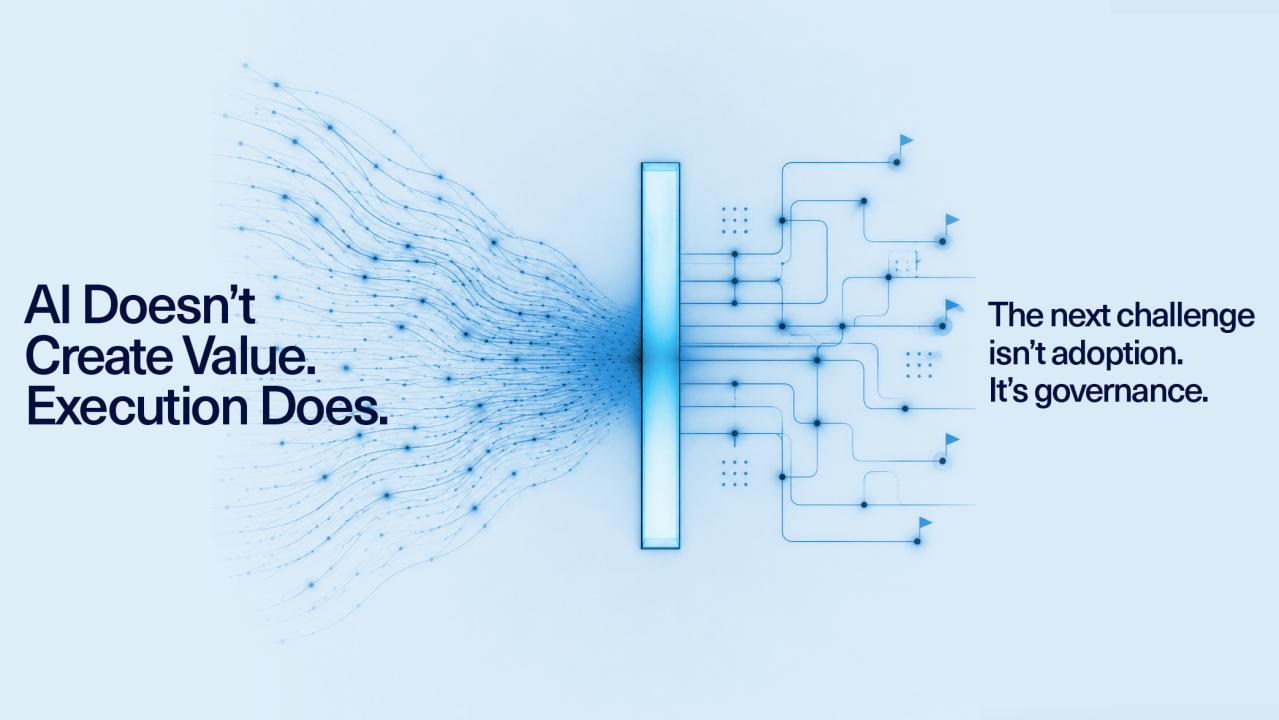
This is where the distinction between orchestration and governance becomes critical.
Orchestration helps work move efficiently.
Governance determines whether that work is creating sustainable operational and economic value.
Those are not the same thing.
Without effective governance, organisations risk creating the appearance of productivity improvement while underlying operational performance remains unchanged.
Behavioural Visibility Is Not the Same as Economic Control
One of the most important developments in the DAP market is the increasing availability of behavioural telemetry.
Organisations can now see:
- Where users hesitate
- Where workflows slow down
- Where tasks are abandoned
- Where rework accumulates
- Where support dependency emerges
- Where AI begins influencing execution behaviour
This level of visibility is valuable, however, visibility alone does not create control.
The platform can identify where problems exist, but organisations still need to determine:
- Which behaviours matter commercially
- Which interventions should be prioritised
- Whether productivity is improving
- Whether value is compounding or degrading over time
Behavioural insight and economic governance are related, but they are not the same thing.
The Measurement Challenge Is Becoming Harder
Traditional adoption metrics focused on:
- Training completion
- User engagement
- Usage growth
- Deployment coverage
- Support reduction
These measures still have value, but they become less meaningful when AI participates directly in operational execution.
The question is no longer whether users interacted with the platform.
The question is whether the organisation is operating better because of that interaction.
That usually brings the conversation back to time, productivity and operational consistency.
If work takes less time, generates fewer errors, requires less support and produces more consistent outcomes, organisations can begin linking behavioural improvements to measurable business value.
But those gains still require ongoing governance if they are to be sustained.
The Emerging Governance Gap
One of the weaknesses of enterprise transformation has always been that governance often reduces at exactly the point where long-term value generation begins.
Projects end, programme teams dissolve, system integrators move into support mode. The organisation is expected to sustain improvement indefinitely.
AI is likely to make this challenge even more visible.
Organisations will need to determine not only whether people are using systems effectively, but whether AI-assisted execution is improving productivity, quality, consistency and operational performance over time.
That requires continuous governance rather than periodic reporting exercises.
What Enterprises Are Actually Missing
The next challenge in digital adoption may not be gaining access to better telemetry. The platforms are already moving rapidly in that direction. The challenge is determining what that telemetry means commercially and who is accountable for the outcomes.
Organisations will increasingly be able to observe where work slows down, where AI accelerates execution and where value begins to erode after go-live, but visibility does not create accountability. Someone still needs to determine:
- Which behaviours matter economically
- Whether productivity gains are real
- Where intervention should occur
- Whether value is improving or declining over time
- Who owns the answer once the project team has disappeared
That governance layer is now beginning to emerge around digital adoption.
The platforms will continue becoming more intelligent.
The bigger question is whether organisations will become equally effective at governing the value created by that intelligence once it becomes embedded inside the operational flow of work.
The organisations that solve that challenge successfully are unlikely to view digital adoption as a guidance layer anymore.They will increasingly treat it as part of the operational infrastructure through which enterprise value is measured, protected and continuously governed over time.